
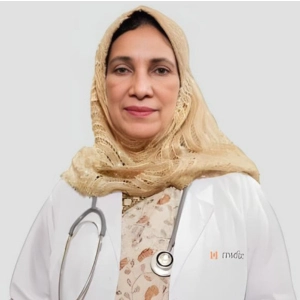
Fatema Ashraf
Shaheed Suhrawardy Medical College & Hospital, BangladeshPresentation Title:
From awareness to action: Empowering patients in Gestational Diabetes Management (GDM)
Abstract
Introduction: Gestational Diabetes Mellitus (GDM) poses significant risks for both maternal and neonatal health. Traditional approaches often fail to involve patients in managing their condition actively. This study explores the effectiveness of ‘patient empowerment model’ compared to conventional management in improving health outcomes of GDM patients.
Methods: A cluster randomized controlled trial was conducted involving 459 GDM patients across six hospitals in Dhaka, Bangladesh who were randomized into intervention (n=240) and non-intervention group (n=219). The intervention group received a comprehensive empowerment package, focusing on self-management, dietary control, and blood glucose monitoring, while the control group received standard care. Statistical analysis included Poisson regression and generalized estimating equations, accounting for cluster variation and potential confounders.
Results: ‘Patient empowerment’ approach significantly improved glycemic control (p= <0.001) leading to better maternal and fetal outcomes. The intervention group demonstrated higher adherence to dietary plans (p =<0.001), reduced insulin use (p=<0.001) and greater patient satisfaction (p= <0.001). The intervention group experienced fewer adverse maternal outcomes (16.7%) compared to control (27.8%) (p=0.004). Fetal complications e.g. respiratory distress (p = 0.046) and need for NICU support (p= 0.041), were notably lower in the intervention group. However, no significant difference noted regarding mode of delivery (p = 0.229).
Conclusion: Empowering patients to manage GDM through education and self-monitoring resulted in improved maternal and neonatal outcomes. The findings suggest that incorporating patient empowerment into GDM management could reduce complications and enhance overall treatment efficacy.
Biography
TBA

Organization Location
1309 Coffeen Avenue, STE 1200, Sheridan, Wyoming 82801, USA
General Enquiry
contact@scientexconferences.com
Finance Enquiry
finance@scientexconferences.com
Call us at
USA : +1 510 370 1934