
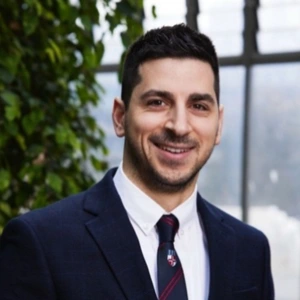
Georgios Tsinaslanidis
Royal London Rotation, UKPresentation Title:
Three-Dimensional CT-based planning for reverse shoulder arthroplasty in chronic anterior dislocation: Tips and tricks
Abstract
This manuscript describes the management of a patient with a chronic (18-month) fixed anterior shoulder dislocation with an anterior glenoid bony defect of <25%. This patient was wheelchair-bound, and it was important to restore a functional, pain-free shoulder to maintain the patient's quality of life and independence. Management of this injury remains challenging and must be individualised according to patient and injury factors. The surgical team chose to treat the patient with a reverse shoulder arthroplasty, in light of the chronic nature of the injury, the patient's comorbidities and mobility needs. The surgical dissection was expected to be challenging, and the procedure was planned using pre-operative planning software. The dissection of the humeral head was challenging due to the formation of adhesions, osteophytes inferior to the native glenoid and severe soft-tissue scarring. The humeral head was approached from an initial deltopectoral approach and extensive releases, in order to mobilise the humeral head and perform the humeral cut. In addition, three-dimensional (3D) evaluation proved invaluable for accurate assessment of this complex glenoid deformity.
The glenoid bony defect was managed by orientating the eccentric glenosphere positioned anteriorly and a high-offset humeral tray, with the high-offset positioned posteriorly. This construct would accommodate and neutralise the significant forces from the soft-tissue scarring that would make the replacement prone to dislocation. This case demonstrates that good prosthetic fixation can be achieved, despite a bony defect through minor alteration of the orientation of prosthetic components.
Biography
Born and raised in Greece, Georgios Tsinaslanidis completed his medical degree before moving to the UK to pursue his orthopaedic career. During the COVID-19 pandemic, he worked as a research fellow in ITU at Croydon University Hospital, leading multiple clinical trials while also earning a Postgraduate Certificate in Medical Education from the University of Manchester. Now a trainee on the prestigious Royal London Rotation in Trauma and Orthopaedics, he also plays a key role as the Social Media Manager, helping to connect and engage the orthopaedic community. When he's not in theatre or managing social media, you’ll likely find Georgios playing football, or escaping to Greece for some well-earned sunshine, because nothing beats a holiday back home!

Organization Location
1309 Coffeen Avenue, STE 1200, Sheridan, Wyoming 82801, USA
General Enquiry
contact@scientexconferences.com
Finance Enquiry
finance@scientexconferences.com
Call us at
USA : +1 510 370 1934