
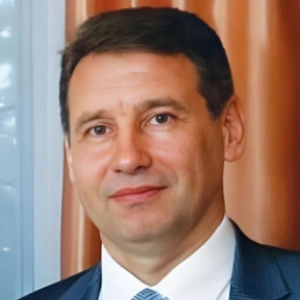
Igor Temnenko
Bohdan Khmelnytsky National University of Cherkasy, UkrainePresentation Title:
Evaluation of post-COVID-19 pelvic hemodynamic and hormonal changes in women by bioelectrical resonance testing ("Parkes-D") during treatment with the "temp" galvanization and electrophoresis device and the "Bioxyd-Plasma-Detox" Electrophoresis Solution
Abstract
This study evaluated galvanization and electrophoresis using the Temp device and author-developed Bioxyd-Plasma-Detox solution for post-COVID disorders affecting vascular, hormonal, reproductive, and respiratory function. From September 2024 to May 2026, 97 women with persistent symptoms 6 months to 1.5 years after laboratory-confirmed COVID-19 were examined. Symptoms included weakness, lower abdominal pain, exertional dyspnea, insufficient air indoors, excessive sweating, and depressive symptoms. Parkes-D bioresonance testing (BRT) assessed organ function. Venous blood and urinary cortisol levels were also measured. Marker-based BRT compared measurements with and without an electronic marker; differences ≤7 units were considered normal, and those >7 indicated elevated cortisol. Treatment involved galvanization (3 V direct current; electrodes on the back at diaphragm level and both feet) and electrophoresis with Bioxyd-Plasma-Detox. After therapy, the mean Parkes-D BRT cortisol indicator decreased from 22 to 5 units, with no values exceeding 7 units. Serum cortisol decreased from 750 nmol/L to the reference range (138–690 nmol/L), and urinary free cortisol from 300–500 to below 214 nmol/day. The positional difference in tidal volume (TV, %) decreased from 120% to 12% (spirometry method). Difficulty breathing, weakness, excessive sweating, and chronic cough resolved. CT showed improved lung expansion and aeration, with reduced inflammation, pneumosclerosis, and pulmonary fibrosis. Among 20 women with CIN I, repeat examinations showed no abnormalities. Of 10 women with CIN II, 4 no longer had detectable CIN II; 6 showed a 30% reduction in epithelial involvement and an 80% reduction in symptom severity. Menstruation resumed in 10 women after 2 years of menopause and in 17 with amenorrhea. Of 40 women with menstrual irregularities and associated psychological and sleep disturbances, 33 reported complete symptom resolution and 7 partial improvement. Electrophoresis and galvanization with Temp and Bioxyd-Plasma-Detox may benefit women with post-COVID disorders. Parkes-D BRT warrants further validation as a complementary assessment tool.
Biography
Igor Temnenko received his Doctor of Medicine degree in 2013. He is an Honorary Professor of the Department of Medical Rehabilitation, Psychology and Health at the Albert Schweitzer International Institute for Interdisciplinary Research and Education in Hannover, Germany, and an Academician of the European Academy of Natural Sciences and Integrative Medicine (Hannover). He is a rehabilitation specialist and researcher in biology at the Department of Anatomy, Physiology and Physical Rehabilitation at Bohdan Khmelnytsky National University of Cherkasy, Ukraine. His research interests include medical rehabilitation, integrative medicine, physiology, and bioresonance methods. His researches have been published in the Cherkaskyi Visnyk of Bohdan Khmelnytsky National University and in the European Medical Society journal, including Archives of Medical Research.

Organization Location
1309 Coffeen Avenue, STE 1200, Sheridan, Wyoming 82801, USA
General Enquiry
contact@scientexconferences.com
Finance Enquiry
finance@scientexconferences.com
Call us at
USA : +1 510 370 1934